
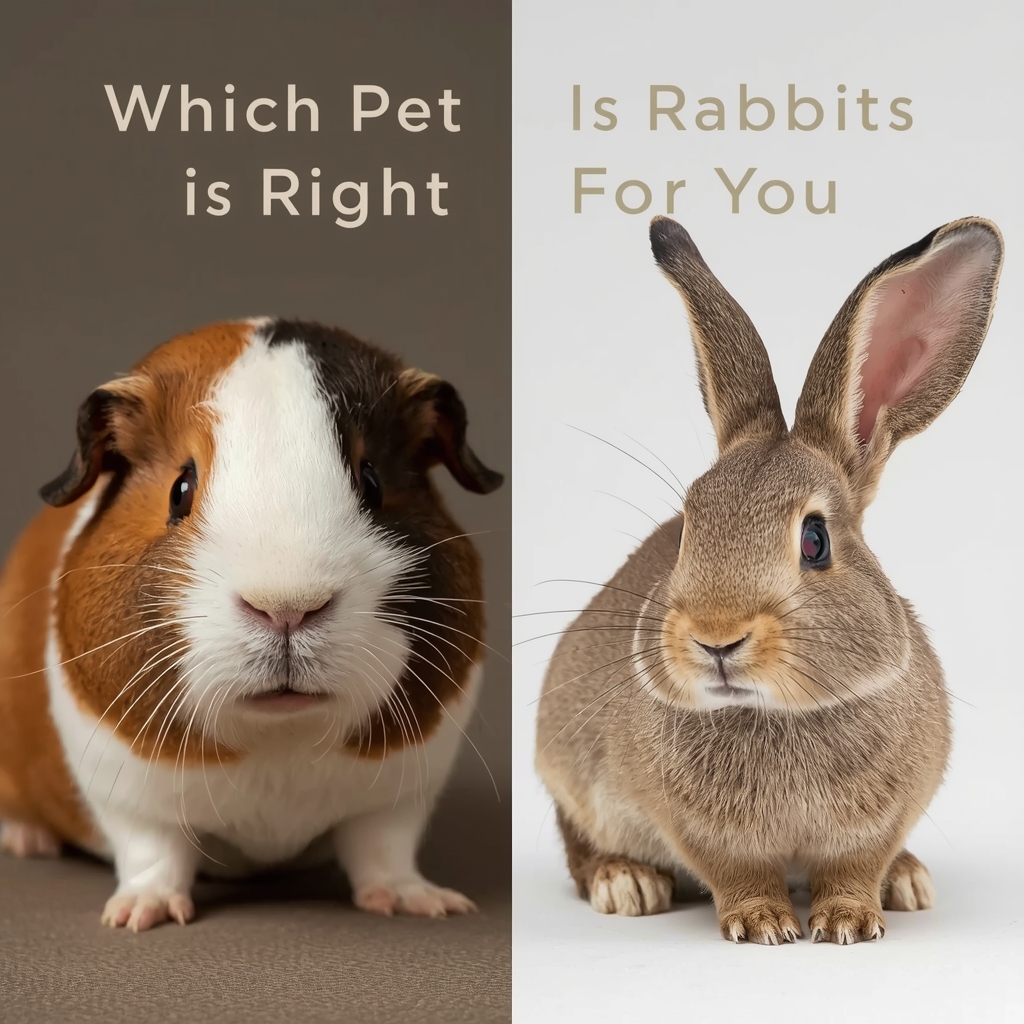
“Mom, can we get a small pet?” If you have kids, you’ve heard this. If you’re an adult who wants manageable companionship without the demands of a dog or cat, you’ve thought it. Guinea pigs and rabbits top the list for first-time small pet owners, but they’re very different animals with different needs.
I co-owned a pet store for five years and have kept both species. Let me break down the real differences so you choose the right pet for your lifestyle—not just the cutest face at the shelter.
Quick Comparison Overview
| Factor | Guinea Pig | Rabbit |
|---|---|---|
| Lifespan | 5-7 years | 8-12 years |
| Size | 1.5-2.5 lbs | 3-12+ lbs (varies by breed) |
| Space Needs | 7.5 sq ft minimum | 12+ sq ft minimum |
| Diet | Hay + pellets + veggies + Vitamin C | Hay + pellets + veggies |
| Social Needs | Must have same-sex companion | Can live alone (but prefer bonded friend) |
| Handling | Sit on lap, less jumpy | Ground level, may scratch/kick |
| Noise | Vocal (wheek wheek!) | Generally quiet |
| Vet Costs | Lower (exotic vet) | Higher (exotic vet, spay/neuter) |
Space and Housing
Guinea Pigs: Compact but Active
Guinea pigs need a minimum 7.5 square feet cage for two (they must live in pairs), but 10.5+ square feet is better. They’re ground-dwelling and don’t jump or climb, so height doesn’t matter much.
Pros: Smaller footprint, can’t escape easily, simpler housing
Cons: Still need daily floor time outside the cage
Rabbits: Need Room to Roam
Rabbits need exercise. A cage is just their bathroom and safe space—they need several hours daily of supervised room or house time. Minimum hutch size is larger, and they chew baseboards, cords, and furniture if unsupervised.
Pros: Can be litter-trained and free-roam like cats
Cons: Need significant space and rabbit-proofing
Diet Complexity
Guinea Pigs: Vitamin C Critical
Guinea pigs are like humans—they can’t make their own Vitamin C. Without daily supplementation (through veggies or tablets), they get scurvy and die. This non-negotiable requirement adds complexity.
Daily needs:
- Unlimited hay (80% of diet)
- 1/8 cup pellets per pig
- 1 cup veggies (including Vitamin C sources like bell peppers)
- Vitamin C supplement if not getting enough through veggies
Rabbits: Simpler but Sensitive
Rabbits don’t need Vitamin C supplements, but their digestive systems are delicate. Too many pellets or the wrong veggies cause GI stasis—a potentially fatal condition where their gut stops moving.
Daily needs:
- Unlimited hay (80% of diet)
- 1/4 cup pellets per 5 lbs body weight
- 2 cups greens per 6 lbs body weight
Rabbits have more sensitive systems overall. Diet changes must be gradual.
Personality and Interaction
Guinea Pigs: Chatty Companions
Guinea pigs are vocal. They wheek when hungry, purr when happy, chatter teeth when annoyed, and squeal when scared. They’re predictable, rarely bite, and enjoy sitting on laps being petted. They’re awake during the day and sleep at night—matching human schedules.
Best for: Kids who want an interactive pet, people who enjoy vocal pets, lap pet enthusiasts
Rabbits: Quietly Complex
Rabbits are prey animals to their core. They’re quiet, observant, and easily frightened by loud noises or rough handling. They don’t typically enjoy being held (it triggers their prey response), though they may sit beside you for pets.
They’re crepuscular—most active at dawn and dusk. This doesn’t match most human schedules.
Best for: Patient owners, quiet households, people content with watching rather than cuddling
Social Needs
Guinea Pigs: Must Have Friends
Guinea pigs are herd animals. A solitary guinea pig is a depressed, lonely guinea pig. You must adopt at least two same-sex guinea pigs (or a bonded pair). This doubles your space, food, and vet costs.
Rabbits: Can Live Alone
Rabbits can be happy solo if you provide significant daily interaction. However, bonded pairs are happier and easier to care for (they entertain each other). Spaying/neutering is essential for bonding and health.
Spay/neuter costs $200-500+ for rabbits. This is a major upfront expense many owners don’t expect.
The Verdict
Choose a Guinea Pig if:
- You want a vocal, interactive pet
- You have limited space
- You want a lap pet
- You have respectful, gentle children
- You don’t mind daily Vitamin C management
- You’re okay with a 5-7 year commitment
Choose a Rabbit if:
- You have space for a free-roam pet
- You prefer a quiet, observant companion
- You’re patient and respect prey animal behavior
- You can afford spay/neuter and potential vet costs
- You’re committed to 8-12 years
- You’re willing to rabbit-proof your home
Neither is a starter pet you ignore. Both need daily care, fresh food, clean housing, and veterinary attention from exotic vets (not all vets see them). Guinea pigs are generally lower-maintenance but have the Vitamin C requirement. Rabbits live longer but need more space and have more complex behaviors.
Choose based on your lifestyle, not which one is cuter in the moment.
Leave a comment