
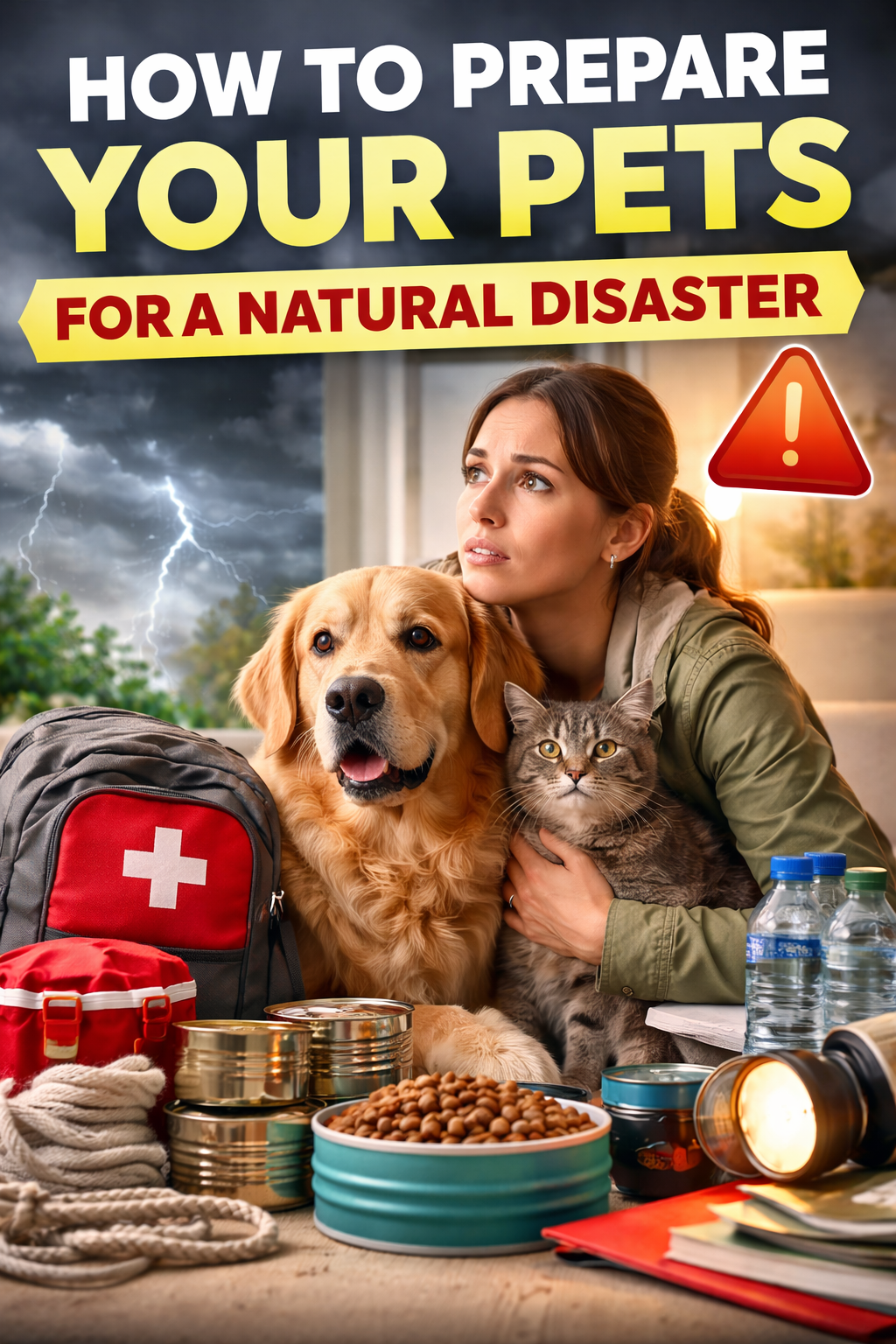
Hurricane Katrina changed how America thinks about pets and disasters. Thousands of people refused to evacuate because they couldn’t take their animals. Thousands of pets were left behind, stranded on rooftops, or drowned in floodwaters. It was a tragedy that led to the PETS Act, requiring disaster plans to include animals.
But here’s the truth: having a law on the books doesn’t help you when the sirens go off. When you have ten minutes to leave before the wildfire reaches your street, panic sets in. That’s when preparation—or the lack of it—becomes the difference between safety and heartbreak.
I’ve lived through two major hurricanes with pets. Let me show you how to prepare so you never have to make an impossible choice.
The Hard Truth About Pets in Disasters
Red Cross shelters don’t accept pets. Emergency responders may refuse to evacuate your animals. If you wait until the last minute, pet-friendly hotels fill up, and your only option becomes leaving them behind.
The solution? Plan now. When disaster strikes, you’ll execute a plan, not make desperate decisions.
Your Pet Emergency Kit: The Basics
Store everything in waterproof, portable containers. Keep one kit at home, one in your car if possible.
Food and Water (72-hour minimum)
- Food: 3-7 days of canned food (pop-top cans don’t need openers) or dry food in waterproof containers
- Water: 1 gallon per pet per day
- Manual can opener (if using non-pop-top cans)
- Food/water bowls (collapsible ones save space)
- Treats: For stress relief and training during chaos
Pro tip: Rotate food every 3 months. Emergency supplies expire, and you don’t want to discover spoiled food when you need it.
Medical Supplies
- Two-week supply of medications (clearly labeled with dosage instructions)
- First aid kit: Bandages, antiseptic, tweezers, thermometer, styptic powder
- Medical records: Vaccination certificates, prescription lists, recent vet visit summaries
- Recent photos: Printed photos of your pet (not just on your phone) showing distinctive markings
Prepare. Plan. Practice your evacuation route. Because when the sirens sound, the prepared survive—and so do their beloved companions.




Leave a comment