
Last Tuesday, my neighbor’s dog died. She told me later that he’d been “off” for days—sleeping more, not interested in walks, just not himself. She thought he was tired. By the time she realized something was seriously wrong, it was too late.
I’ve been a dog owner for twenty years, and I still remember the panic of not knowing whether a symptom was “wait and see” or “emergency room now.” Dogs can’t tell us what’s wrong. They rely on us to read the signs.
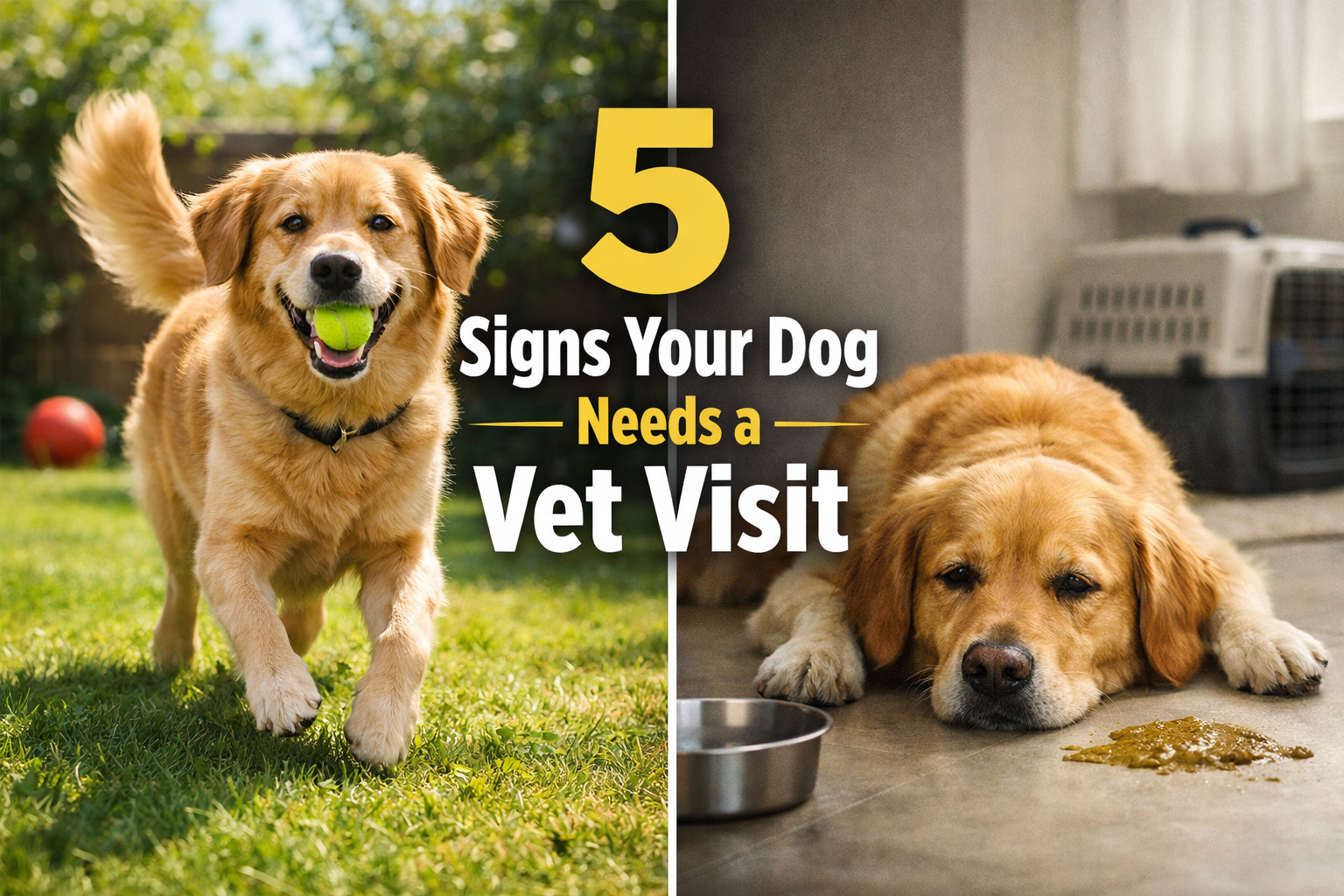
Here are five warning signs that should never, ever be ignored. Print this list. Put it on your fridge. When you see these signs, call your vet immediately.
Sign #1: Changes in Eating or Drinking Habits
Your food-obsessed Lab turns up his nose at dinner. Your dog who normally drinks a bowl a day suddenly can’t get enough water. These aren’t quirks—they’re red flags.
Watch for:
- Refusing food for more than 24 hours
- Drinking significantly more or less than usual
- Drinking excessively while eating less (classic diabetes or kidney sign)
- Difficulty chewing or dropping food
What it could mean: Dental disease, kidney disease, diabetes, liver problems, gastrointestinal issues, or pain.
I learned this lesson with my Border Collie. She stopped eating, and I assumed she was being picky. Two days later, we discovered a massive dental abscess. If I’d waited longer, the infection could have spread to her bloodstream.
Sign #2: Behavioral Changes and Personality Shifts
Your social butterfly suddenly hides when guests arrive. Your couch potato becomes restless and anxious. These personality changes are often the first sign of illness.
Watch for:
- Unusual aggression or irritability
- Hiding or avoiding contact
- Excessive clinginess or neediness
- Restlessness or inability to settle
- Loss of interest in favorite activities
What it could mean: Pain, neurological issues, thyroid problems, cognitive decline in senior dogs, or emotional distress from illness.
Dogs are creatures of habit. When their behavior changes significantly, they’re not being difficult—they’re communicating.
Sign #3: Respiratory Distress
This one is non-negotiable. If your dog is struggling to breathe, every minute counts.
Watch for:
- Rapid breathing at rest (normal is 15-30 breaths per minute)
- Labored breathing with visible effort
- Blue or pale gums
- Open-mouth breathing (except in hot weather or after exercise)
- Coughing, especially at night or when lying down
- Noisy breathing or wheezing
This is an emergency. Do not wait. Do not “see how they are in the morning.” Respiratory distress can indicate heart disease, pneumonia, allergic reactions, or airway obstructions—all potentially fatal without immediate treatment.
Sign #4: Digestive Issues: Vomiting and Diarrhea
Dogs get into things. They eat trash, swallow socks, and sample mysterious substances in the yard. Occasional stomach upset happens. But there’s a line between “ate something weird” and “something is seriously wrong.”
Call the vet if you see:
- Vomiting more than twice in 24 hours
- Blood in vomit or stool (even a small amount)
- Black, tarry stool (indicates bleeding in upper digestive tract)
- Diarrhea lasting more than 48 hours
- Vomiting or diarrhea accompanied by lethargy or loss of appetite
- Inability to keep water down
Go to emergency immediately if:
- Your dog ate something toxic (chocolate, grapes, xylitol, medications)
- Vomiting contains foreign objects or looks like coffee grounds
- Severe abdominal bloating (especially in deep-chested breeds—possible bloat)
Bloat (gastric dilatation-volvulus) kills dogs within hours. If your large breed dog has a distended belly and is trying to vomit without producing anything, get to the vet NOW.
Sign #5: Mobility Changes and Pain Signals
Dogs are masters of hiding pain. It’s a survival instinct from their wild ancestors—showing weakness makes you vulnerable. By the time you notice a limp, your dog has probably been hurting for a while.
Subtle signs of pain include:
- Reluctance to jump onto furniture or into the car
- Slower movement, especially getting up from lying down
- Limping or favoring a leg
- Stiffness, particularly in the morning
- Changes in posture or gait
- Excessive licking of a specific area
- Panting when not hot or exercised
- Trembling or shaking
What it could mean: Arthritis, joint injuries, hip dysplasia, back problems, soft tissue injuries, or even cancer.
Never give your dog human pain medication. Ibuprofen and acetaminophen are toxic to dogs. If you suspect pain, call your vet for appropriate treatment.
Trust Your Gut
You know your dog better than anyone. If something feels wrong—even if you can’t explain why—call your vet. I’ve never regretted taking my dog in “just to be safe.” I have regretted waiting too long.
Remember: dogs age faster than we do. A “wait and see” approach that might be fine for a human can be dangerous for a dog. When in doubt, check it out.
Print this checklist. Laminate it. Know these signs by heart. Your dog is counting on you.


Leave a comment