
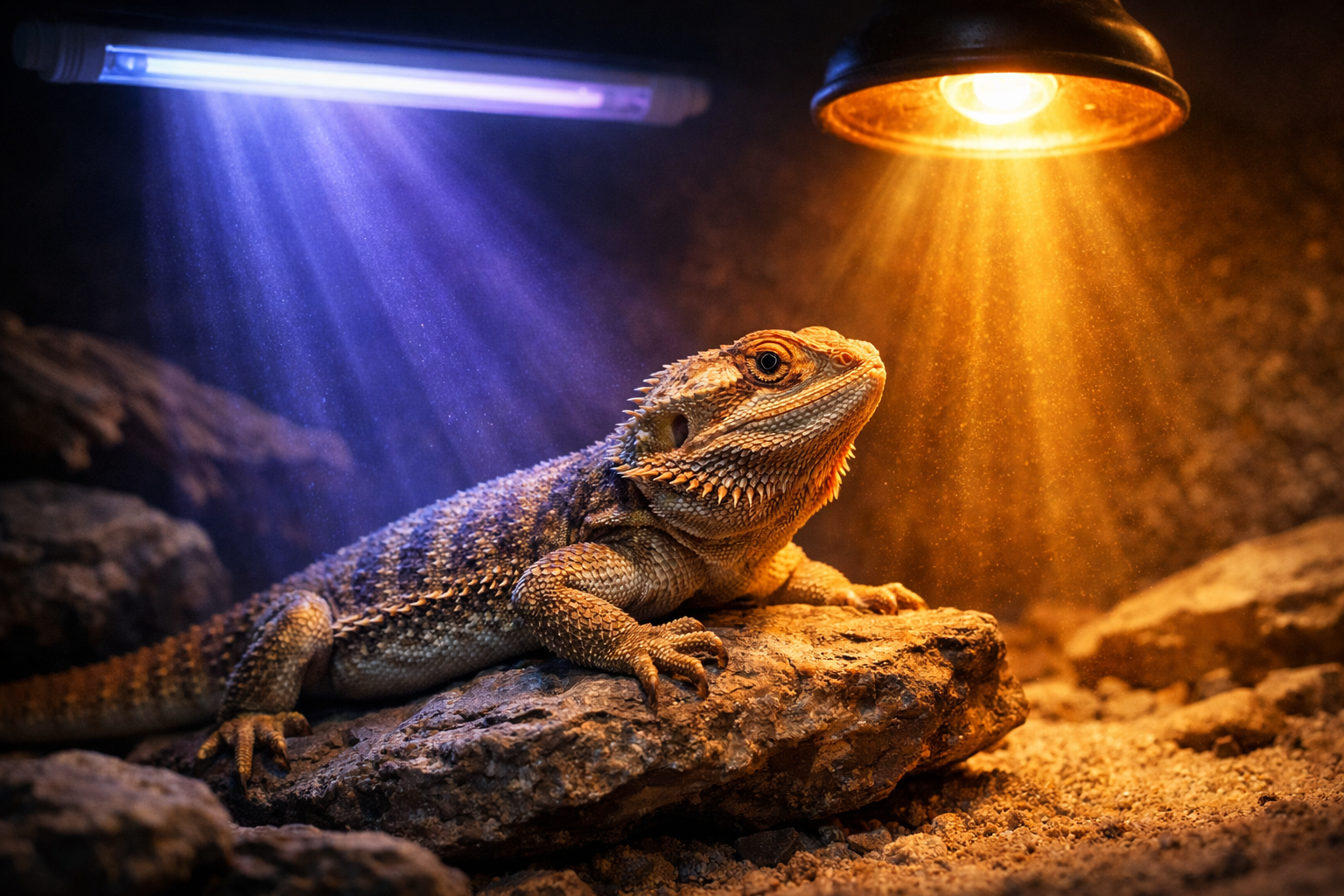
The call came from a worried bearded dragon owner. Their beloved pet was showing signs of metabolic bone disease—all because of inadequate UVB lighting. The owner had bought a bulb six months ago. It was still producing visible light, so they assumed it worked. But UVB bulbs lose effectiveness long before they burn out.
Reptile lighting isn’t optional—it’s a critical life support system.
Why Reptiles Need Special Lighting
Heat for digestion: Reptiles need belly heat to digest food. Without proper temperatures, food rots in their gut.
UVB for calcium metabolism: UVB allows reptiles to synthesize vitamin D3. Without UVB, they cannot absorb calcium, leading to metabolic bone disease—a painful, deforming condition.
Ferguson Zones
Dr. Gary Ferguson categorized reptiles by UVB needs:
Zone 1 (0-1.4 UVI): Crepuscular/shade dwellers (leopard geckos, crested geckos)
Zone 2 (1.1-3.0 UVI): Partial sun baskers (juvenile bearded dragons)
Zone 3 (2.9-7.4 UVI): Open sun baskers (adult bearded dragons, tortoises)
Zone 4 (6.0-9.5 UVI): Desert specialists
UVB Bulb Types
Linear Fluorescent (T5 and T8): Even UVB distribution. T5 more intense, longer-lasting (12-month replacement). T8 less intense, 6-month replacement.
Mercury Vapor Bulbs (MVB): Produce heat, UVA, and UVB in one bulb. High intensity. Require ceramic sockets.
Setting Up Your Lighting
- Research your species’ Ferguson zone
- Choose appropriate UVB strength
- Determine correct distance (follow manufacturer guidelines)
- Create a gradient—never light the entire enclosure equally
Replacement Schedule
- T8 UVB bulbs: Every 6 months
- T5 UVB bulbs: Every 12 months
- Mercury vapor bulbs: Every 6-12 months
Proper lighting isn’t optional equipment—it’s the foundation of reptile health.

Leave a comment