
When I brought home my first bearded dragon, I made every mistake possible. Wrong tank size, inadequate lighting, dangerous substrate—I even named him before I realized I couldn’t tell if he was male or female for another six months. (It’s Smaug now, gender-neutral and dignified.)
Bearded dragons are surprisingly complex pets. They need specific temperature gradients, UVB lighting that mimics Australian desert sun, and environments that satisfy their instinctual behaviors. Get it wrong, and you’ll face metabolic bone disease, respiratory infections, and a very unhappy lizard.
But get it right? Bearded dragons are incredible companions—interactive, personable, and genuinely responsive to their owners. Let me walk you through creating the perfect home for your scaly friend.
Tank Size: Bigger Is Always Better
Here’s the truth: most “starter kits” sold at pet stores are woefully inadequate. A baby bearded dragon might look tiny in a 20-gallon tank, but they grow fast.
Minimum tank sizes:
- Baby (under 10 inches): 40-gallon breeder tank (36″ x 18″ x 18″)
- Juvenile (10-16 inches): 55-gallon minimum
- Adult (16+ inches): 75-gallon or 4x2x2 enclosure (120 gallons)
Adult bearded dragons are active, curious animals. They need space to move, thermoregulate (move between hot and cool zones), and display natural behaviors. I’ve seen too many dragons stuck in cramped tanks, lethargic and stressed.
Glass tanks work, but consider PVC or wooden enclosures for better heat retention. Custom-built 4x2x2 enclosures are increasingly popular and worth the investment.
The Lighting System: Life or Death
If you remember nothing else from this guide, remember this: bearded dragons will die without proper UVB lighting. Period.
UVB Lighting
UVB enables vitamin D3 synthesis, which allows calcium absorption. Without it, dragons develop metabolic bone disease—a painful, deforming condition where bones become rubbery and weak.
Requirements:
- Tube UVB, not coil bulbs: Reptisun 10.0 T5 HO or Arcadia 12% are gold standards
- Position 6-8 inches from basking spot: UVB intensity drops off rapidly with distance
- Replace every 6-12 months: UVB output degrades even when visible light still works
- 12-hour photoperiod: Use a timer for consistency
Cover no more than 1/3 to 1/2 of the tank with UVB. Dragons need UVB-free zones to escape if they want.
Basking Light
Bearded dragons need a basking spot of 95-110°F (35-43°C) for proper digestion and immune function. This requires a separate heat bulb, not the UVB light.
Use a bright white basking bulb (halogen floodlights work well and are affordable). Position it over a sturdy basking surface—not directly on the screen top if using a glass tank, as the screen filters UVB.
Always use a thermostat or at minimum, reliable thermometers. Digital with probes are most accurate; avoid stick-on dials.
Nighttime Heating
Unless your house drops below 65°F (18°C), bearded dragons don’t need night heat. They benefit from a temperature drop that mimics natural desert nights. If you do need supplemental heat, use a ceramic heat emitter (CHE)—it produces warmth without light, preserving their day/night cycle.
Creating the Temperature Gradient
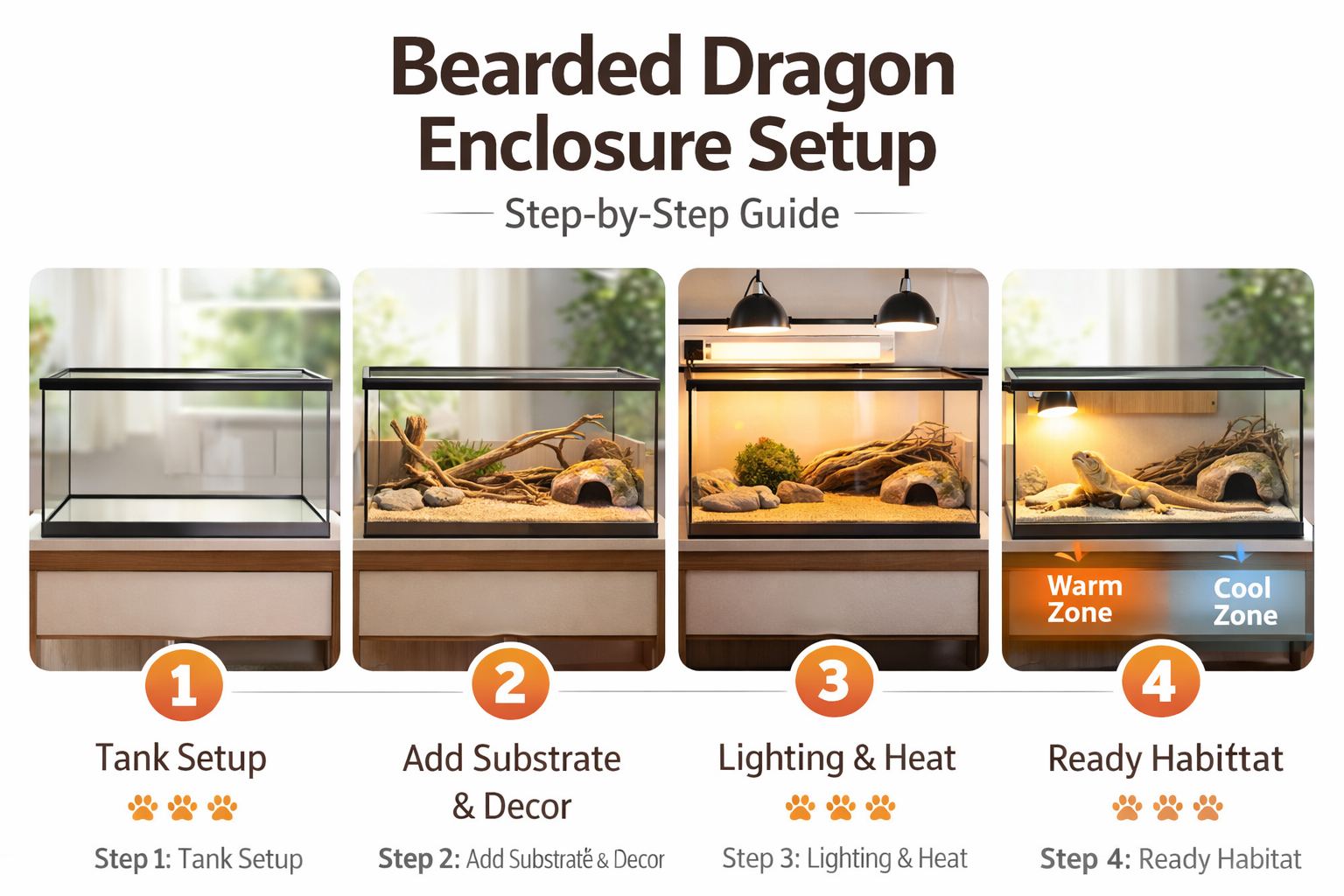
Reptiles are ectotherms—they rely on external heat sources to regulate body temperature. Your enclosure needs distinct zones:
Hot side (basking area): 95-110°F surface temperature
Warm side (ambient): 85-90°F
Cool side: 75-80°F
Use multiple thermometers to monitor each zone. I keep one digital thermometer at each end plus an infrared temperature gun for spot-checking basking surfaces.
Your dragon should move between these zones throughout the day. If they constantly hide on the cool side, the basking area might be too hot. If they never leave the basking spot, it might not be warm enough.
Substrate: Making the Safe Choice
This is controversial in the reptile community, but here’s my stance based on veterinary evidence:
Avoid loose substrates for juveniles: Sand, calcium sand, walnut shells, and similar products cause impaction when swallowed. Baby dragons are clumsy hunters and inevitably ingest substrate with their food.
Safe options:
- Tile or slate: Easy to clean, natural look, helps wear down nails
- Non-adhesive shelf liner: Cheap, easy to replace, good traction
- Paper towels or newspaper: Not pretty, but perfectly safe for quarantine or babies
- Excavator clay: Can be molded into caves and tunnels, solidifies when dry
- Organic topsoil/play sand mix (for adults only): 50/50 mix, at least 6 months old
I use slate tile in my enclosures. It’s attractive, holds heat well, and cleaning is as simple as wiping with reptile-safe disinfectant.
Enrichment: Hides, Climbs, and Decor
Bearded dragons need environmental enrichment for psychological health:
Essential Hides
Provide at least two hides—one on the warm side, one on the cool side. Dragons need secure places to retreat when stressed. Half logs, cave structures, or even cardboard boxes work.
Climbing Opportunities
Despite their “ground-dwelling” reputation, beardies love to climb. Add sturdy branches, rocks, or platforms. Ensure everything is stable—a falling object can seriously injure your dragon.
Basking Surfaces
Flat rocks or platforms positioned under the basking light give dragons a place to flatten out and absorb heat. Rough surfaces help with shedding.
Visual Barriers
If the enclosure is in a high-traffic area, add plants (real or artificial) along one side. Dragons feel exposed in bare tanks and may become stressed.
Water and Humidity
Bearded dragons come from arid Australian environments. They don’t need high humidity—in fact, excessive moisture causes respiratory infections.
Target humidity: 30-40%
Provide a shallow water dish that won’t tip easily. Many dragons won’t drink from standing water; they prefer water droplets. Daily misting or a dripper encourages drinking.
Monitor humidity with a digital hygrometer. If you live in a humid climate, increase ventilation or use a dehumidifier in the room.
Food and Feeding Setup
Feed insects in a separate container or on a plate to prevent substrate ingestion. Salad can go directly on a flat dish or tile.
Keep a feeding journal. Tracking what your dragon eats, how much, and their weight helps catch health issues early. Sudden appetite changes are often the first sign of illness.
Maintenance Schedule
Daily: Spot clean feces, refresh water, offer fresh salad
Weekly: Deep clean food dishes, wipe down surfaces
Monthly: Full enclosure cleaning and disinfecting
Every 6 months: Replace UVB bulb
Final Thoughts
Setting up a proper bearded dragon enclosure takes time, research, and money. Expect to spend $300-500 minimum on a quality setup. But consider it an investment in your dragon’s health and your enjoyment as an owner.
Smaug has been with me for four years now. When I open his enclosure, he perks up, darkens his beard (his version of a smile), and waits patiently for interaction. That relationship—the trust, the recognition, the daily routine we share—is worth every dollar and every hour of research.
Welcome to the wonderful world of bearded dragon keeping. Your new friend is lucky to have you.

Leave a comment